All his Money, In a Word

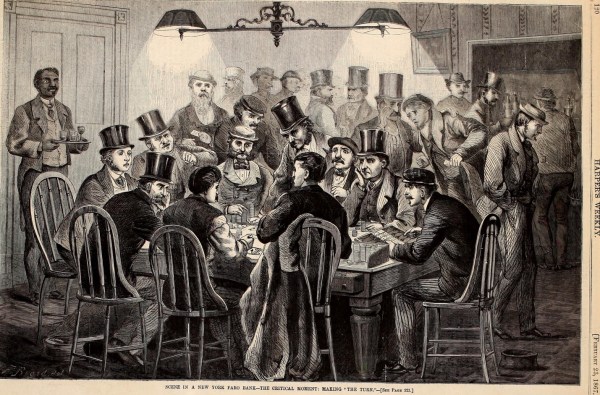
“Scene in a New York Faro Bank,” Harper’s Weekly, 23 February 1867: 120.

by Leslie Myrick

Charles Godfrey Leland, (1824-1903),[1] Philadelphia-born journalist, folklorist, translator of German poetry, and writer on the Romani and the occult, is best remembered as the creator of the humorous balladeer “Hans Breitmann,” who made his first appearance in “Hans Breitmann’s Barty” in the June 1857 issue of Graham’s Magazine. As a lexicographer of slang as a sub-category of folk language,[2] Leland was also a creator and a connoisseur of lists. This post will examine a list of slang words for “money,” which he published in two different formats while working as a journalist in Philadelphia in1855 and 1857. Continue reading “All his Money, In a Word”
An interview with the author of “The Names of All Manner of Hounds,” David Scott-Macnab

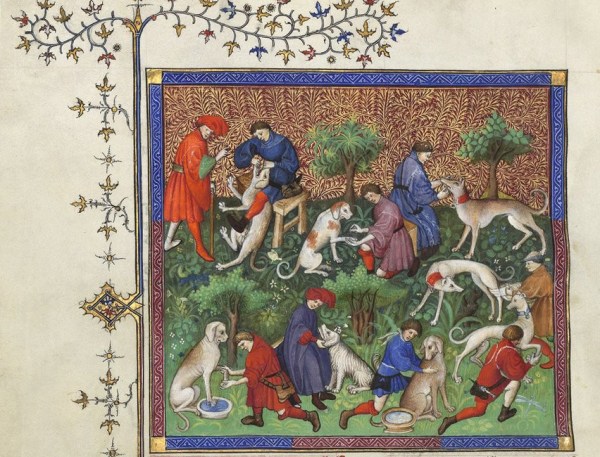
Gaston Phébus, Livre de la Chasse, Bibliothèque Nationale de France, MS Fr. 616, f.40v. Source gallica.bnf.fr / BnF

Few scholarly articles on medieval topics become internet sensations, but Professor David Scott-Macnab’s “The Names of All Manner of Hounds: A Unique Inventory in a Fifteenth-Century Manuscript,” published in 2013, was that one in a million.[1] The article features a list of no fewer than 1065 names for hounds–alphabetically ordered from “Argente” to “Yonkir”–prefaced by a discussion of the great affection medieval hunters felt for their hounds.[2] Many bloggers picked up the article; it has been the topic of several Reddit conversations, and one fan even used its list of names to create a dog-name generator. Continue reading “An interview with the author of “The Names of All Manner of Hounds,” David Scott-Macnab”

A Cabinet of Conundrums: An 1846 List of Proposed “Curiosities” for the Smithsonian Institution

by Leslie Myrick and Martha Rust

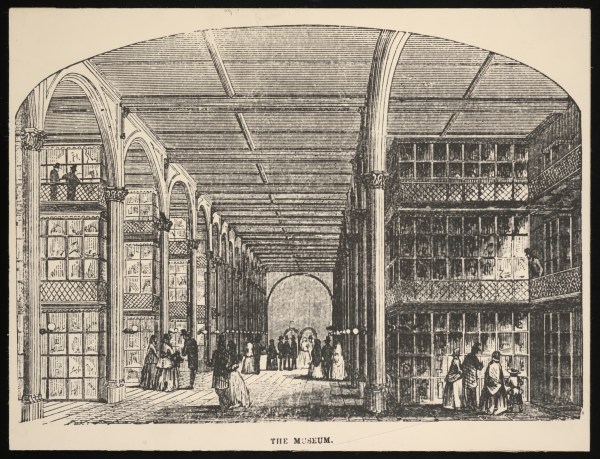
In July 1836 the United States Congress was the contingent beneficiary of a $500,000 bequest made by English scientist James Smithson (1765-1829) for the establishment of a new National Museum in Washington, D. C. to be known as the Smithsonian Institution. Smithson, the illegitimate son of Hugh Percy, the first Duke of Northumberland, never married and named a nephew as heir to his considerable fortune. When the nephew died without issue six years after Smithson’s death in Genoa in 1829, the bequest was duly transferred to Congress for the foundation of an American National Museum. A museum, as noted in our recent post “L’allure de liste,” can be a site that both contains list-like arrangements of objects and inspires written lists of the same. In the case of the Smithsonian museum, a curious list of proposed objects suggests that the list form itself could be the subject of a museum exhibition.

Continue reading “A Cabinet of Conundrums: An 1846 List of Proposed “Curiosities” for the Smithsonian Institution”

“Every Variety of Professions”: Ships’ Passenger Lists from Two New England Gold Mining Companies in 1849

Robert B. Honeyman, Jr. Collection of Early California and Western American Pictorial Material, The Bancroft Library, Berkeley, California

by Leslie Myrick

In honor of Labor Day this post takes a look at what a couple of member lists of mining and trading companies that left for the California gold rush early in 1849 can tell us about the exodus of skilled tradesmen from Eastern cities and towns and the economic impact of that exodus. An estimated 50,000 people, primarily young men, traveled by land and sea from the Eastern states to seek new opportunities in California in the year 1849 alone.

Continue reading ““Every Variety of Professions”: Ships’ Passenger Lists from Two New England Gold Mining Companies in 1849”

Lists of Knightly Accolades in the Liber Memorialis Friderici III. Imperatoris

by Alicia Lohmann

In 1436, shortly after his accession to power as duke, Frederick V, who would later become Emperor Frederik III, decided to make a pilgrimage to the Holy Land. After his return he created a list of knightly accolades, or dubbings (“Ritterschlagsliste”), in the so-called Liber memorialis Friderici III. imperatoris (Vienna, Austrian National Library, Cod. 2674, f.3), which provides information about the nobles who were knighted alongside Frederick at the Holy Sepulcher.[1] The young duke traveled to the center of the Christian medieval world, accompanied by at least 50 nobles and Bishop Marinus of Trieste. The list reads as follows:

Continue reading “Lists of Knightly Accolades in the Liber Memorialis Friderici III. Imperatoris”

Enlisting Allies

The National Memorial for Peace and Justice, Montgomery Alabama
photo by Soniakapedia

by Amanda Gerber

George Floyd, Regis Korchinski-Paquet, Breonna Taylor, Tony McDade, Dion Johnson, James Scurlock, Manuel Ellis, Ahmaud Arbery. These names are only an abbreviated list of Black lives brutally stolen by police or vigilantes during the past few weeks, a list that only includes names that rose to public attention and omits those routinely oppressed and over-policed. Continue reading “Enlisting Allies”

James Joyce’s Refrigerator, or, Thirteen Ways of Looking at Lists (numbers 7-13)

by Jeremy Gavron

Seven. I know, too, that the list is involved in what I know.

Eight. So we have looked at a poetry list, a memoir list and now I want to look briefly at a fiction list: “An Incomplete Timeline of What We Tried”, by Debbie Urbanski. Here are some lines from the beginning of the story, followed by some lines from the end.

Continue reading “James Joyce’s Refrigerator, or, Thirteen Ways of Looking at Lists (numbers 7-13)”

Medieval Lists of the Dead: What Are They and Who Reads Them?

by Laura Moncion (University of Toronto)

The premodern period was full of lists, as many of this blog’s previous entries have shown. Medieval monasteries in particular, as the bureaucratic centres of medieval Western Europe, produced and dealt with a large number of lists: the monastic hours of each day, calendars of saints’ days, monastic rules and customaries, charters, profession and patronage records, and many others. Among these types of monastic lists are lists of the dead, including the monastic necrology and liber vitae (book of life), both types of lists intended to memorialize the deceased members of a monastic community. Continue reading “Medieval Lists of the Dead: What Are They and Who Reads Them?”

Blog at WordPress.com.

Up ↑